“Hell wasn’t really created, just like evil wasn’t really created. Hell is simply the state and the place into which the fallen angels fell. In other words, in a sense, they made it themselves.” – Fr. Seraphim Rose
I’ve suffered with mental illness for most of my life. But I am not alone. In the United States, 23% of the adult population live with some sort of mental illness; 11.4% take a prescription medication for depression – 15.3% of women and 7.4% of men; the suicide rate among men is approximately four times higher than among women. Men make up 50% of the population, but nearly 80% of suicides. In addition, there is a high prevalence of trauma among those with severe mental illness; with almost 40% meeting the criteria for PTSD (posttraumatic stress disorder). Within a population that I am well acquainted, there is a high rate of mental illness in the LGBT community; for example, compared to heterosexuals, gay and bisexual men have twice the rate of anxiety disorders and schizophrenia and (or) psychotic illness; not surprisingly, that group of people also experienced a lot of childhood abuse and trauma.
During much of the past 40 years or so, I’ve either been on prescription medications for depression, anxiety, or PTSD, and I have been in psychotherapy. Sometimes these interventions and therapies have helped, sometimes they haven’t. Like most treatments for any illness, they should be accompanied by certain lifestyle changes. In terms of mental illness, we must change how we manage certain situations, change how we react to stress, change how we approach daily life, and literally change the way we think. Only, that’s easier said than done.
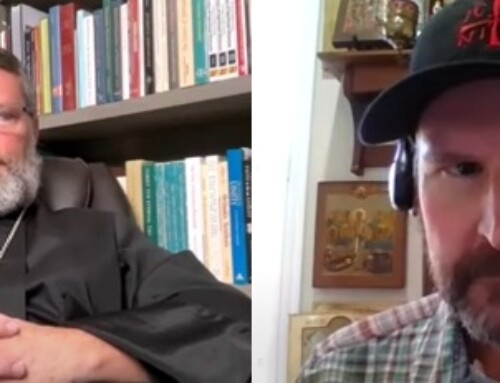
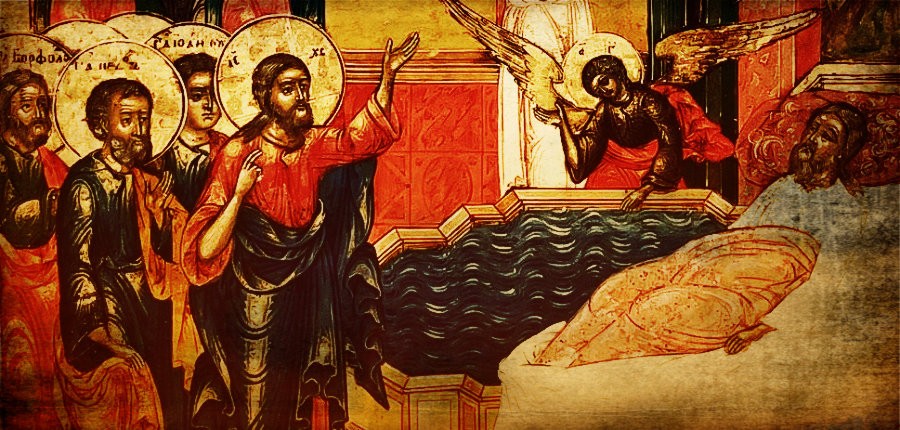
During a conversation I has with Fr. Deacon Ananias Sorem about the incredibly deleterious effects of betrayal, he mentioned a passage from Holy Scripture – Mark 7:34. This section regards the healing of a deaf man (who also had a speech impediment) by Jesus Christ; where Christ says to the man: “Ephphatha…be opened.” “Ephphatha” is an Aramaic word that means “be opened.” The word is a command, and upon Jesus saying it, the deaf man’s ears were opened and his tongue was released, allowing him to hear and speak plainly.
What struck me about the words of Christ where His admonition to the deaf man – to be opened. Why did Jesus need to say this to him? If the man was deaf, how did he hear it? Was the deaf man resistant to healing? I think Christ uttered these words, because there was hesitance in this man. Here, I am reminded by the healing of the paralytic in John 5. That man had laid by the healing pool of Bethesda for thirty-eight years and remained unchanged. Why? When Christ sees the poor man, He immediately asks him: “Do you want to be made well?” Like with the deaf man, I believe that Christ sensed resistance. As I know all too well, oftentimes chronic illness or habitual lifestyle choices result in complacency, depression, and a fatalistic attitude. We close ourselves off to any new possibilities – to a different live – and to healing. This can come from a form of obstinacy which originates with our lack of faith. From “The Gospel of Mark,” directly before the healing of a blind man at Bethesda, Christ says to His disciples in a boat as they cross the Sea of Galilee: “Do you not yet perceive nor understand? Is your heart still hardened? Having eyes, do you not see? And having ears, do you not hear?” This is a sort of spiritual blindness. This spiritual blindness or deafness is cited in “The New Testament” through the repeated reference to a passage from the Prophet Isaiah. Matthew, Mark and “The Book of Acts” quote Isaiah who heard The Lord God say to him:
“For the heart of this people has become insensitive, and their ears hear with difficulty. They have closed their eyes, lest they should see with their eyes, and hear with their ears, and understand with their heart, and return, and I should heal them.”
Here, closed eyes and ears result in a lack of understanding – and the inability to be healed. So, all of this got me thinking about what it means to be closed (or open) in terms of biology/physiology, psychology, and the spiritual life.
“There is no fear in love; but perfect love casts out fear, because fear involved torment.” – 1 John 4:18
Fear, for example, anxiety, nervousness, and PTSD, can cause various forms of physical constriction – muscular tension, rapid heartbeat, chest tightness; while a sense of calm, contentment, and serenity will result in the near opposite – muscular relaxation, lower heartrate, and slower respiration. This forms the opposing sympathetic and the parasympathetic systems which are two branches of the autonomic nervous system; the sympathetic prepares the body for the “fight or flight” response; for this reason, those who suffer with “panic attacks” often describe a feeling as if they are hyperventilating or even having a heartache; a study even found that “a significant proportion of emergency department visits for non-cardiac chest pain” are due to panic attacks.
Part and parcel with these two states which the mind and body seem to constantly inhabit is the status of either being “open” or its opposite – constricted or closed. In terms of our physiology, when we are open or relaxed (unfearful) this manifests in our body; the results are vasodilation – widening of blood vessels which increases the flow of blood; airway dilation which improves airflow into the lungs; and pupil dilation which allows more light to enter the eyes when under darker conditions. During the fight or flight response, stress hormones constrict blood vessels resulting in increased heart rate and blood pressure; our muscles tense up to prepare for potential harm; the release of hormones like adrenaline and cortisol can also lead to faster breathing and airway constriction. In summary: open and constricted describe two opposing states of physiological structures, primarily regulated by smooth muscle contraction and relaxation, playing crucial roles in controlling flow and regulating bodily functions.
I’ve lived most of my life in a perpetual state of fear, my insides bathed in cortisol, and my head on permanent swivel. I was almost always anxious and fearful. I thought I was high-strung. I was a nervous person. As a result, I was given numerous prescription medications that were supposed to help “take off the edge” and help me to sleep. But I remained hyper-vigilant and my startle-response was pronounced. Studies have shown that this is not unusual in those who survived childhood abuse. To make matters worse, sometimes those who have endured childhood abuse, especially sexual abuse, will compulsively (and unconsciously) attempt to reenact the abuse.
In contrast, the idea is to remain as long as possible in a relaxed state – with our various muscles untwisted, breathing easily, and a resting heart rate of about 65 BPM; it’s no coincidence, that the drugs so many become addicted to will either stimulate or depress our nervous system. After an intense night of partying at a quintessential 1990s rave, I checked into an ER with chest pains and heartbeat that was pumping through my ribcage. After that, I traveled from the “new age” cults of Berkeley to the communes of Big Sur, hoping to find a route towards peace and contentment. But I only found more demons. In my opinion, Christ is the only way. And the most effective tool that God gave us to combat our feelings of fear, anxiety, and torment – is prayer; specifically, the “Jesus Prayer.” The incredibly efficacious power of this prayer is beautifully explored in one of my favorite spiritual works: “The Way of the Pilgrim.” An anonymous masterpiece from 19th century Russia, it’s a sort of travelogue that details the journey of a pilgrim to numerous monasteries and holy sites in Russia. Burdened by his sins, the pilgrim almost immediately crosses paths with an old monk and accompanies him as they both walk towards a monastery. Along the way, the monk says:
“Now listen, I will read to you about how to learn unceasing interior prayer.” The starets opened the Philokalia [a collection of texts from Orthodox spiritual masters], selected a passage from Saint Simeon the New Theologian, and began to read: “Find a quiet place to sit alone and in silence; bow your head and shut your eyes. Breathe softly, look with your mind into your heart; recollect your mind—that is, all its thoughts—and bring them down from your mind into your heart. As you breathe, repeat: ‘Lord Jesus Christ, have mercy on me.’”
St. Simeon was a Byzantine monk who lived during the 10th and 11th centuries; his meditation techniques – which include recommendations on body position, proper breathing, and mental attitude – are remarkable during such an early period in the Western world. His emphasis on the mind and heart I find particularly interesting as they are reminiscent of a concept that’s especially important in Orthodox theology: the nous. The nous is “eye of the heart or soul.” In my understanding, the intellect alone cannot know God, but only in combination with the nous – which is a sense that goes beyond the mere brain. This reminds me of a famous quote from St. John Chrysostom who stated that the church is “a hospital for sinners and not a court of law.” In Orthodoxy, I’ve seen a more holistic approach to religion; and spiritual healing. Roman Catholicism tended to have a rather legalistic approach with its scholastic methodology that is head-centered.
St. Nikephoros the Monk was a 13th century Roman Catholic convert to Orthodoxy who advocated breathing techniques used during prayer; as the lungs, which surrounded the heart, could be used as a means to “force your mind to descend into the heart…” Then, the 14th century Orthodox brother monks Sts. Callistus and Ignatius Xanthopoulos expounded upon these ideas. They wrote: “…concentrate on the prayer, ‘Lord Jesus Christ, Son of God, have mercy on me.’ As you breathe in, that is to say, link the words of this prayer to your breath.”
In the 19th century, St. Ignatius Brianchaninov also mentioned the use of controlled breathing in prayer: “Do not say the prayers hurriedly, one immediately after another. Make a short pause after each prayer, and so help the mind to concentrate. Saying the prayer without pauses distracts the mind. Breathe with care, gently and slowly, this precaution prevents distraction.” Unfortunately, such practices in the West have recently become almost wholly associated with Eastern religions. While their historical presence in Christianity has been lost or obscured or contaminated. For this reason, Fr. Seraphim Rose dedicated an entire chapter to the subject, entitled “Eastern Meditation Invades Christianity,” in his book “Orthodoxy and the Religion of the Future.” Himself once a practitioner of Zen meditation, Fr. Seraphim wrote of such influences in Christianity: “…all of them promise (and give very quickly) an experience of ‘contentment’ and ‘peace.’ But this is not the Christian ideal at all, which if anything may be summed up as a fierce battle and struggle…Christian spirituality is formed in the arduous struggle to acquire the eternal Kingdom of Heaven, which fully begins only with the dissolution of this temporal world, and the true Christian struggler never finds repose even in the foretastes of eternal blessedness which might be vouchsafed to him in this life.”
Fr. Seraphim’s counsel that prayer oftentimes involves a great amount of struggle, reminds me also of something St. John of the Ladder said: “We must lock our mind into the words of prayer by force.” St. Theophan the Recluse made the following warning: “Instantaneous prayer life is impossible. You must make a strong effort to control your thoughts, at least to some degree. Prayer does not come about as you expect—by just wishing for it, and, suddenly, there it is. This does not happen.” St. Barsanuphius of Optina wrote: “In the struggle of prayer, it is absolutely necessary to force oneself, and compel oneself to pray.”
Fr. Thomas Hopko, when commenting on “The Way of the Pilgrim, wrote: “The pilgrim also tells us that the constant repetition of the Jesus prayer, or any other such prayer of the heart, is not a magical or mechanical means to spiritual peace and perfection. The prayer is not an incantation or a talisman. It is a prayer: a personal calling upon the personal God. It is a petition for the Lord to act as He knows and wills for our purification, enlightenment, and deification in an unending life of growth and perfection.”
Most of the time – the majority must force ourselves to exercise; or to eat a healthier diet. Because the easier option is to sit around during free-time and watch television or scroll through Facebook or Instagram while eating a bag of chips or a box of cookies. Though these choices lend a temporary relief from the stresses of the day, afterwards we usually feel worse. For that reason, I never regretted going for a walk with a chotki (prayer rope) in my hand, but I often regretted looking at something on the internet or eating junk food. As Fr. Seraphim remarked, making good choices is often an “arduous struggle.” Since our bodies automatically do what they are used to doing – as in an anxious situation, we tend to become tense and rigid. When I see a possible oncoming confrontation, I either prepare myself to flee or fight, my last thought is to pray. That – needs to unlearned.
“If you want to overcome the whole world, overcome yourself.” – Fyodor Dostoyevsky, “The Demons”
In terms of what I see as the open and closed dichotomy, I think “The Way of the Pilgrim” offers some very important insights:
Banishing all thoughts…exercise this faculty and continually repeat the following: “Lord Jesus Christ, have mercy on me!” Compel yourself always to repeat this. Should you do this for some period of time, then assuredly this exercise will open the doors of your heart.
When the so-called doors of our heart are “open,” this could loosely be described as vasodilation. Stress or anxiety causes vasoconstriction. In my experience, meditation (prayer utilizing the Jesus Prayer) combined with outdoor walking – especially in a quiet natural surrounding – causes improved circulation throughout the body and hence an improved state of mind. In this regard, I’m reminded of the last Czar of Russia, Nicholas II. Besides being a devotee of physical exercise, he was an avid walker. From all the biographical accounts that I have read, he seems to have used walking as a stress reducer. Even when the Imperial family was imprisoned following the Russian Revolution, he continued to walk – first around the rather extensive grounds at Tsarskoye Selo (outside of St. Petersburg) where the Romanovs were under house arrest; and then, rather pathetically, at Yekaterinburg, in a comparatively small and dilapidated home of a local merchant with a small fenced-in yard, where the Czar was reduced to walking in a circle. And throughout out his captivity until his murder, his captors remarked how at-peace the former Czar appeared despite the dire circumstances of himself and his beloved family. Before his conversion to Orthodoxy, the young Eugene Rose (Fr. Seraphim) wrote in a letter to a friend about how walking – in a specifically natural setting – helped him to quiet his inner restlessness: “I find that…when I…go out on a Greyhound bus to Mill Valley and spend the day hiking in Muri Woods, or climb Mount Tamalpais, I do not cling to objects of my desire as I do when I walk the streets of San Francisco…” Likewise, I have also become a daily several miles outdoor walker. During that time alone with God, I continually pray the Jesus Prayer. As a Roman Catholic, I began the practice of praying while I walked. But I prayed the Rosary. In retrospect, these efforts were often characterized by a lack of peace in my heart – as I struggled to “meditate” on each “mystery;” trying to imagine little vignettes in my mind depicting scenes from the life of Christ and His Blessed Mother. It was exhausting; and I’d scold myself because I couldn’t remain focused. Fr. Seraphim Rose warned about utilizing the imagination during prayer:
The Catholic practice of calling up images, memories, etc., of a sacred character is considered by our Fathers as unnecessary and improper. To reflect on one’s reading is one thing, as is likewise to say the Prayer of Jesus or any other prayer in silence; but “meditation” as such is quite foreign to Orthodoxy and in fact can be the entrance to a refined path of spiritual deception.
In his book “Orthodoxy and the Religion of the Future,” Fr. Seraphim cautioned those who seek “religious experiences” in prayer; specifically, those who look for ‘spiritual consolations” and “mystical revelations.” Such apparitions, visions, and locutions characterized much of late-medieval Roman Catholic spirituality. Fr. Seraphim argued that those who sought out such experiences were in a “particular state of spiritual deception.”
Again, this does not mean that prayer cannot bring about joy. Also, from “The Way of the Pilgrim,” is the following description:
As I was experiencing these and other delightful consolations, I noticed that the effects of the prayer of the heart are manifested in three ways: in the spirit, in the feelings, and through revelations. In the spirit there is the sweetness of God’s love, inner peace, the rapture of the mind, purity of thought, and the delightful remembrance of God. In the feelings there is a pleasant warming of the heart, a sweet delight that fills all the limbs, the heart bubbling over with joy, an inner lightness and vitality, the delight of being alive, and an inner detachment from illness and offenses. Revelations bring enlightenment of the intellect, an understanding of Holy Scripture, a knowledge of the language of all creatures, a detachment from all anxious cares, a taste of the sweet delights of the interior spiritual life, and a conviction in the close presence of God and in His love for us.
But, if “The Way of the Pilgrim” is about any one thing, it details the inner struggle against oneself. According to French Orthodox theologian Jean-Claude Larchet, there are “two basic dimensions of the spiritual unconscious.” In his book “The Spiritual Unconscious,” he wrote: “the positive dimension of the spiritual unconscious consists of everything that binds or unites man to God and orients him towards God without being conscious of it…Its negative dimension consists of everything that detaches, separates and distances man from God, and orients him in a direction contrary to God without being conscious of it.” This is reminiscent of the autonomic character which characterizes the sympathetic and parasympathetic nervous system that controls our constricted or relaxed responses to the world. The beauty of nature, walking in a calm state while praying the Jesus Prayer, the profound inspiration to be found in the glory of the Liturgy – all of these can elicit a positive response in both the body and the mind; the opposite occurs when we become involved in situations, acts, or thoughts that pull us away from God; for the most part, speaking from experience, these behaviors are strenuous (even highly damaging) to the body and the psyche – including the use of drugs, alcohol, and pornography which offer a temporary sensation of tranquility and gratification while degrading our mind and body. A similar drive towards a type of euphoric state in thrill seeking, extreme sports, alternate realities. I went down this path – and it became a descent down the psychedelic rabbit role from “Alice in Wonderland.” Within the those XTC-fueled, trance inducing, dance clubs in San Francisco and Los Angeles, I recognized a desperate longing to touch the transcendent – accessible by the only means available in a fallen world. I came from the guitar-strumming, hand-holding folk-masses of 1970s Roman Catholicism where any semblance of the sacred was abandoned; as a result of this madness, for many, the pop singer Madonna became the Madonna. But it’s a caricature. Like the characters in “Wonderland,” everything becomes a caricature. I firsthand witnessed this phenomenon in some of the most unexpected places; where the St. Andrew Cross accompanied by ritualized flagellation appeared at a BDSM street fair; I saw piercings, massive tattoos, and body modifications as a sad way to find union with Christ in suffering. In my own life, this reached an apogee with AIDS as a meaningless martyrdom – dying for sexual liberation. Where the wanderings of restless young men and women from one bar to another; from one dance club to another – and more recently, from one website to another, becomes a pointless pilgrimage that ends in an empty shrine. Jean-Claude Larchet talked at length about the how “desacralization of human existence” created strange pseudo-religions; this includes “movements for complete sexual freedom.” The new age of sexual liberation was supposed to collectively open our minds to new possibilities; unshackled from the conventions of the past; traditional ways of living and organizing your life – like the necessity of marriage – were cast off in favor of open-relationships, cohabitation, and the social acceptance of children born out of wedlock. But this has only resulted in bondage. It’s particularly evident in the interactions among men and women because sexual freedom has only pulled the sexes apart. Men use women for sexual gratification – with no inherent responsibility of marriage or possible pregnancy. Women, through the use of contraceptives and abortion – have become more sexually available, yet this has resulted in an epidemic of clinical depression among young women, increased levels of anger and bitterness, as well as lower rate of marriage and a resulting demographic spiral; in the US, 36.7% of women report having been diagnosed with depression at some point in their lifetime; and those aged 18 to 29 (34.3%) and 30 to 44 (34.9%) have significantly greater depression diagnosis rates in their lifetime than those older than 44. In contrast, married couples who are open to life are able to grow in closeness and a true level of intimacy.
With men, obesity in the US has risen from 16.9% in 1990 to 41.6% in 2022. This is like a form of self-strangulation. Whereby every vital system within the body becomes dangerously constricted. As drugs, sex, and porn have become a substitute for prayer and an actual relationship with God, so has something as mundane as food become the same thing for others; in a related matter, testosterone levels in American young men show a steady decline. Therefore, these substitutes for an actual relationship with God is ultimately detrimental to Man’s psychological as well as physical wellbeing. On this situation, Archbishop Averky Taushev was very clear: “Painfully suffering without true love, he invents for himself different substitutes for love…Instead of belief in true religion and faith in the One and True God, there are substituted various philosophical, political or economic teachings, such as faith in a particular leader…” This new religion has polarized society. And caused some to configure their identity to an ever narrower focus on sometimes arbitrary and shifting desires. People have become slaves to a false ideology. They are not free. Elder Thaddeus of Vitovnica explained what true freedom actually requires: “we can go wherever we want and do whatever we want, but that is not freedom. Freedom belongs to God. When a person is free from the tyranny of thoughts, that is freedom.”
These pseudo-religions have most prominently included the elevation of political and philosophical ideas to the level of the sacred. A significant number, and I was one of them, will base their entire identity upon some nebulous belief-system. Then, any criticism of that system is viewed as a personal attack. And, as a result, people become combative, reactionary, and psychologically and physically tense. Fr. Seraphim Rose wrote: “Atheism, true ‘existential’ atheism, burning with hatred of a seemingly unjust or unmerciful God is a spiritual state; it is a real attempt to grapple with the true God whose ways are so inexplicable even to the most believing of men, and it has more than once been known to end in a blinding vision of Him whom the real atheist truly seeks.” I think what Fr. Seraphim said is that, like the “prodigal son,” when we stray way far afield, the individual eventually reaches a crisis-point. And then they need to make a decision. Do I live or die?
“The world has proclaimed the reign of freedom, especially of late, but what do we see in this freedom of theirs? Nothing but slavery and self-destruction!” – Fyodor Dostoyevsky, “The Brothers Karamazov”
For many years I’ve read and reread “The Brothers Karamazov.” Each time I turn the first page, I feel like I just started reading it for the first time as I constantly see something new and unexpected in the story. But my focus has almost always been on the effect the father (Fyodor Karamzaov) has on his three sons: Dimitri, Ivan, Alyosha, and the illegitimate Smerdyakov. For the most part, Fyodor could be described as an evil, maniacal, half-mad monster who abused, neglected, psychologically manipulated, and left his sons with varying degrees of severe trauma. And they all dealt with it in different ways. Most like his father – Dimitri is a sensualist and libertine whose made a religion out of loose living; Ivan lives in his head and has become a philosophical nihilist; Alyosha chose the path of prayer and was blessed to be under the guidance and tutelage of a spiritual father; at one time or another, except for Alyosha, all of them have been consumed by hatred and anger; Smerdyakov is probably the most disturbed as his abuse was incredibly severe – which caused him to be highly susceptible to outside influences. From “The Brothers Karamazov,” specifically spoken by Ivan, we learn that “everything is permitted.” And in such a world, we now live. And in “The Brothers Karamazov,” Dostoevsky explores what would happen in such an environment. Dostoevsky wrote: “the devil is struggling with God, and the battlefield is the human heart.” The war that is raging in the three “Brothers” manifests itself not only in their words and actions, but in their physical body. In Dimitri, he is possessed by an anxious spirit that is almost bipolar. Swiss schemamonk Gabriel Bunge writes that: “The first and surest indication of despondency is a certain inner restlessness.” Dimitri seems to thrive in chaos; or so it seems; “something disorderly and absurd began, but Mitya [Demitri] was in his natural element, as it were, and the more absurd it all became, the more his spirits rose.” But is all this – the music, drinking, and revelry – just a diversion? Unlike his sullen brother Ivan, Dimitri does not incessantly brood over his pain and resentment. I was once gripped with the same kind of insanity; most of all, I was afraid of any moment of quiet or stillness – every second had to be filled with activity and noise; hence, the contemporary obsession with an endless stream of background noise – the television always on and the smartphone permanently in-hand. Dimitri’s hysteria eventually leads to a crash and a subsequent reappraisal of his life. Over the years, many parents with wayward children have asked me how they can help their son or daughter. Oftentimes, these parents worry that their child is near death. My usual response was – “They might have to hit rock bottom.” For those Israelites listening to Christ’s words concerning the “prodigal son,” when the boy in the parable was reduced to feeding and living with swine, they would have recognized that as sinking to the lowest depth of existence. Only, these times of doubt are also usually accompanied by physical privation and suffering; for the prodigal son was literally near death.
With Ivan, his inability to deal with the trauma of his past – and the subsequent anger and hatred – ends in physical and mental devastation: fevers, hallucinations, and unconsciousness. From an early age, Dostoevsky writes that there was already something different about Ivan: “I will only say that as he was growing up he was somehow gloomy and withdrawn…” While I do not believe that believe that behaviors, desires, nor the personality is genetically determined, but I do believe that some people are born with a certain temperament. From an early age, it appears that Ivan tended to internalize his struggle – while Demitiri was more physically demonstrative. While Ivan’s inner struggle is evident on his face; during their most contentious discussions, Ivan tries to explain to Alyosha why he is an atheist. And as Ivan describes some particularly gruesome examples of child abuse – Alyosha notices his brother’s visage: “You have a strange look as you speak…as if you were in some kind of madness.” St. Nikon of Optina said: “Sin leaves its mark not only on the soul, but also on the exterior of a person, on his outward appearance and behavior.” Yet, I like Ivan; he’s my favorite character in the book. I think, similar to myself, has been deeply wounded. Consequently, he is very angry. And filled with hatred. I get that. But he also cares. He’s also sensitive. That’s why he agonizes about the plight of maltreated and butchered children. The harm that was done to him – and to others – has left its mark on his heart. Only that heartache has affected everything about him. During the course of the novel, Ivan often complains about pains in his head. It’s well known that stress causes the constriction and narrowing of both the arteries and the blood vessels. By the end of the book, he has gone mad.
I think it is St. Porphyrios who accurately describes someone like Ivan; he wrote: “Certain people often become overwhelmingly distressed about the state of the world. They are vexed when they see that the will of God is not done today by others and by themselves and they suffer with the physical and psychological pain of others. This sensitivity is a gift of God…They do, however, run a danger. If they do not entrust their life fully to Christ, it is possible for the evil spirit to exploit their sensitivity and to lead them to depression and despair.” Despite Ivan’s repeated protestations against a God that he does not believe exists, Ivan still has a very strong need to believe in something; he wants to believe in kindness, empathy, and love; especially love for his neighbor and fellow human being. He doesn’t strike me as a cold and heartless Czarist era nihilist. Remember the atheistic revolution in Russia that was supposed to usher in a new era of justice and peace began with the vicious slaughter of the children of Nicholas II and ended in the deaths over 10 million people. The Russian nihilist and psychopath Sergei Nechaev inspired Dostoevsky’s novel “Demons.” Nechaev’s “The Revolutionary Catechism,” which probably would have been known by the character of Ivan, was a hate-filled diatribe that extolls any means towards revolution; he wrote: “Our task is terrible, total, universal, and merciless destruction.” This is the world that godlessness unleashes. God is the only thing that restrains the barbarism of Man. As Fr. Seraphim said, as with the fallen angels, we make our own hell. Fr. Seraphim also stated: “…if there is no truth, if Christian truth is not to be understood literally and absolutely, if God is dead, if there is no immortality – then this world is all there is, and this world is absurd, this world is hell.” Hence, this explains the tense anxiety and fearfulness that’s been inculcated in so many.
“How will you live…With such a hell in your heart and your head?” – Alyosha Karamazov
For many years, I’ve been interested in the triad formed by the mind, body, and soul (heart). When they are disconnected from each other, the result is chaos, sickness, and disease. But even when they are separated, or not working in union, they are adjacent enough to still influence each other. For instance, depression, anxiety, or unresolved trauma will eventually cause a host of physical problems. And the effects are long-lasting; decades after the conflict ended – some veterans of the Vietnam War continue to have poorer health outcomes due to the lingering consequences of PTSD and trauma. The reasons for the continuation of this problem are complicated and correlates with the general hesitance of men to seek help or treatment for mental health issues, and due to the type of treatments themselves which are available. For this reason, men experience much higher rates of suicide, alcoholism, and drug abuse than women.
St. Ignatius Brianchaninov wrote: “The separation of the mind from the heart, and their opposition to one another, have resulted from our fall into sin…With the union of the mind and the heart the ascetic receives the power to resist all passionate thoughts and passionate feelings.” During much of my youth, I was ruled by inexplicable compulsions (passions) which were at least partially controlled by the trauma of the past. These compulsions oftentimes required that I put myself at risk of physical harm; therefore, its not surprising that in certain subgroups there is a strong correlation between childhood sexual abuse and later manifestation of sexually compulsive behaviors in adulthood. In those days, I would sometimes think about what I was doing; I thought it was stupid and dangerous. Although, at the time, I had no religious inclinations – I still became overwhelmed afterwards with an oppressive restlessness and despair. I couldn’t explain it, but I’d usually just repeat those same activities in a vain attempt to find peace. For this reason, hardcore drug addicts rarely stop after their first bad trip or overdose. I’ll never forget a sad friend who died sprawled out on a dirty bed in a cheap and sleazy motel with a needle stuck in his arm; he was already HIV-positive; the further you go down that road – even if you know its headed nowhere – the less reason you have to turn around. From a young age, we were all torn apart; fragmented into millions of pieces. I guess our frantic searching was a vain attempt to glue ourselves back together. St. Theophan the Recluse said: “Bring your need for God to the front of your mind, then begin to draw your mind into your heart.” But how do we do it?
According to St. Seraphim of Sarov: “When the mind and heart are united in prayer and the soul’s thoughts are not dispersed, the heart is warmed by the spiritual warmth in which the light of Christ shines, making the whole inner man peaceful and joyous.” That is the way. Prayer. In his book “Orthodox Dogmatic Theology,” Protopresbyter Michael Pomazansky wrote:
Mental (noetic) prayer, inward prayer, and prayer of the mind in the heart are usually associated with the Jesus Prayer…Archimandrite Sophony (Sakharov) indicates a sequence in the practice of the Jesus Prayer: “First it is a verbal matter…Next, we no longer move our lips…In the third stage mind and heart combine to act together: the attention of the mind is centered in the heart and the prayer is said there. Fourthly, the payer becomes self-propelling. This happens when the prayer is confirmed in the heart and, with no special effort on our part, continues there, where the mind is concentrated. Finally, the prayer. So full of blessing, starts to act like a gentle flame within us…rejoicing the heart with a sensation of Divine love and delighting the mind in spiritual contemplation.”
During “intense prayer,” St. Gregory Palamas wrote that “the body too in a strange way is lifted up and warmed.” Bodily warmth is a sign of good circulation while coldness in the limbs, numbness, and tingling indicates the opposite – usually the construction of the circulatory system often accompanies bouts of extreme anxiety and stress. St. Porphyrios wrote: “Pray to God with open arms. This is the secret of the saints. As soon as they opened their arms, they were visited by divine grace.” But this can be a difficult endeavor. I remember when I finally when to see a doctor after suffering with chronic neck and shoulder strain for many years; I was plagued with near constant headaches. After looking at me, he immediately detected my tendency to pull my shoulders upward. I never noticed, yet I’d been this way for years. Now, I refer to this condition as a “turtle response.” After experiencing abuse, or trauma, it becomes almost a primordial instinct to try to retract your head inside your body as defensive mechanism; I also habitually kept my arms crossed in front of me. Though I’ve noticed there are numerous ways in which hurt individuals attempt to “armor” themselves from further harm; through hostile and hateful behavior, a transgressive outward appearance, layers of adipose tissue, or by submerging into a world of online and virtual fantasy which causes further isolation. For instance, more younger men than women (63% versus 34%) are choosing to remain single; while record numbers of young people will never marry; therefore its not surprising that 47.8 million Americans are suffering from depression. Wounded and hurt people are afraid to love and to accept love from those around them – and because God is often thought of as an abstract concept, it’s almost impossible to love or be loved by Him. In the US, those who are religiously unaffiliated (or “nones”) which includes atheists, is the fasting growing “denomination.”
In a world without Faith and God, anything is possible; Ivan Karamazov repeatedly states that “anything is lawful.” I witnessed this firsthand in San Francisco; at first, the unwillingness to enforce laws concerning the sale and use of marijuana seemed rather enlightened and progressive, but within a few years, poor souls are shooting-up on city sidewalks; likewise, turning a blind-eye to public nudity led to the possibility of copulation in public during the numerous LGBT street fairs. There’s a quote from Randy Shilts, the author of “And the Band Played On, that I never tire of repeating; partly due to who wrote it, the context, and absolute truth of the statement; he wrote: “The trouble was that, by definition, you had a gay male subculture in which there was nothing to moderate the utterly male values that were being adulated more religiously than any macho heterosexual could imagine…Promiscuity was rampant because in an all-male subculture there was nobody to say ‘no’ – no moderating role like that a woman plays in the heterosexual milieu.” Here, Shilts, in the midst of the AIDS epidemic, that decimated his Boomer generation of gay men, was trying to understand exactly what happened. His conclusion: gay men attempted to create a world completely outside the bounds of Christian morality – or even natural law, i.e. the tenants of basic biology. They gambled and lost. Similar experiments at a brave new world were attempted in the Soviet Union – resulting in the deaths of millions.
Those who get caught-up in such a mad world are oftentimes permanently damaged from the experience. But even individuals who appear unrelated or on the periphery of the “experiment” can be adversely affected; I am thinking of the innocent hemophiliacs (including many children) who ended-up dying of AIDS. In “The Brothers Karamazov,” I am reminded of Ilyusha Snegiryov and the boy’s tragic story which intersects with all the drama of the Karamazov family. For many of us, our hope rests in the prayers of those who managed to remain in the world, but “not of this world.” The spiritual father of Alyosha, Father Zosima, once said in a homily: “Remember…everyday and whenever you can, repeat within yourself: ‘Lord, have mercy upon all who come before you today.’ For every hour and every moment thousands of people leave their life on this earth, and their souls come before the Lord – and so many of them part with the earth in isolation, unknown to anyone, in sadness and sorrow that no will mourn for them…” When I was lost and didn’t even know it, I remember being horrified once I learned that someone was praying for me. I was revolted by such pious and well-meaning people. Ivan had a similar reaction to Alyosha: “…during the night his soul was seized by some inexplicable and humiliating terror, which – he could feel it – even suddenly robbed him, as it were, of his physical strength. His head ached…Something hateful was gnawing at his soul, as he were about to take revenge on someone. He even hated Alyosha…at moments he hated himself very much as well.” Ivan’s incessant rage when he speaks with Alyosha, Ivan’s need to justify his worldview, and his growing hysteria is a sign of a deepening philosophical entrenchment or a symptom of doubt and desperation. This is the scenario that played-out in the life of Fr. Seraphim Rose, Initially, as a young man, he bought-into the weird beatnik scene in San Francisco where he’d gone to live and study Asian languages and culture. Letters to his old college friends from this period are usually long and complex. But by the eve of the sexual revolution and the counter-culture movement, which were about to pop in the Haight-Ashbury, Fr. Seraphim had already figured-out what was about to happen. Because, for the most part, he had lived it. And found it empty. In one letter, he wrote: “I vote for the extremes…If surrounded by pleasure, one must inflict pain upon oneself, and suffer consciously if necessary.” I’ve done that; pushed myself to the edge in order to somehow set yourself free; followed by a strange inclination towards self-harm – in my case, getting tattoos and piercings was a strange form of repentance. In the West, there’s been a curious rise in what’s been termed “non-suicidal self-injury” with “cutting” being the most prominent form of this phenomenon. Wounded people wound others, but they also eventually turn on themselves. Fr. Seraphim wrote:
“When conversion takes place, the process of revelation occurs in a very simple way – a person is in need, he suffers, and then somehow the other world opens up. The more you are in suffering and difficulties and are ‘desperate’ for God, the more He is going to come to your aid, reveal Who He is and show you the way out.”
I’ve often maintained that the best opportunity for conversion occurs when everything appears to be at its darkest point. At those crucial moments, on the individual and the collective level, the trajectory goes in two different directions; for example, within cults, when the illusion of utopia begins to disappear, they can become violent, self-destructive, and suicidal; when individuals hit the proverbial “rock bottom,” they either take another hit and die or immediately reassess their situation and the choices they’ve made. Thankfully, when I crashed and fell face-forward onto the sidewalk outside a San Francisco sex-club, I chose the latter. And it happened rather quickly. Almost immediately, Christ offered His hand and showed me “the way out.” According to St. Ambrose of Optina: “Years are not needed for true repentance, and not days, but only an instant.” I’ve often said that those who appear to be the most lost are exactly the individuals on the verge of a radical transformation; even within the utterly bleak world of atheism, God is present. In his very useful book “Orthodox Psychotherapy,” Metropolitan of Nafpaktos Hierotheos wrote: “The heart is the hell into which Christ descends and frees man’s soul.”
“If you pray from all your heart for salvation – even a little – you will be saved.” – St. Moses of Optina
In “The Brothers Karamazov,” Ilyusha Snegiryov is the sickly and bullied boy of an impoverished former army captain and due to the actions of Dimitri Karamazov – his father falls into public shame. In my opinion, the extreme psychological stress endured by this sensitive child makes his illness even worse. This situation reminds me of the disabled boy in the children’s novel “The Secret Garden” who is left unable to walk after his father’s psychological breakdown; and Brad Pitt’s character in the film “Ad Astra” who is emotionally shut-down since the childhood abandonment of his father. By the end of “The Brothers Karamazov,” Ilyusha has died though Alyosha is able to gather around him the boys who formerly tormented the poor dead child. He tells the boys that the memory of the suffering Ilyusha might one day in the future serve as something great and powerful. As the scene at Ilyusha’s grave is mixed with pathos and joy; many of the boys have tears in their eyes. Hierotheos wrote: “Tears are of great value. The saints urge the Christian to weep, because in that climate the heart is purified and acquires spiritual sensitiveness, overcoming its hardness.” Archpriest Victor Potapov wrote: “The Holy Fathers of the Church teach us to ask of the Lord the gift of tears, because without tears there can be no real repentance and cleansing of the soul.” Tears can have a cathartic effect, but they also activate the parasympathetic nervous system which promotes relaxation.
And, on a related topic, I believe there is such a thing as a “broken heart.” I believe that some people have actually died from a broken heart; there is a strong linkage between cardiovascular disease and mental illness – especially depression. But I also believe that hearts can be mended. In the Psalms we read: “He heals the brokenhearted, and He binds up all their wounds.”
Rather early in the story of “The Brothers Karamazov,” as the turmoil and eventual horrific reality inside his family unfolds around him, Alyosha offers this quiet prayer:
“Lord have mercy on them all today, unhappy and stormy [also translated as tormented] as they are, preserve and guide them. All ways are yours, save them according to your ways. You are love, you will send joy to all.”
St. John of Tobolsk wrote: “If you react to misfortunes with anger, you will feel the greatest heaviness. But if you accept everything…then you will always have peace of heart.” Dimitri Karamzov often mentioned the heaviness and pain in his heart. At the funeral of his spiritual father, Father Zosima, Alyosha has a sort of waking dream during which: “Something burned in Alyosha’s heart, something suddenly filled him almost painfully, tears of rapture nearly burst from his soul…” Right after: “He wanted to forgive everyone and for everything, and ask forgiveness, oh, not for himself! But for all and for everything…” And in such good souls as Alyosha – and they have always been with us – who are truly Christ-like in that they overcome their fears and draw strength from God in prayer; there is hope for those who’ve suffered. For from St. John of Tobolsk we also read that Christ in the Garden of Gethsemane “was sorrowful, even to death, afraid of the coming Passion. However, after His prayer, having recommitted Himself completely to the Father’s will, he received strength and even encouraged the disciples to stay strong in the face of their coming enemies.”
There are brave souls who are willing to open up their arms and pray for the butchered and betrayed children of this world; they pray for us and with us. They are compassionate and they are trust-worthy. And they are willing to suffer by our side. In fiction, Alyosha Karamazov is an example. Throughout all of their trauma and turmoil, he remained a steadfast pillar of truth and sincerity to his broken brothers. And, in my opinion, the best sections of the book are the conversations between Alyosha and Ivan. Most of the time, Alyosha says very little in response; he allows his brother to vent volumes of anger – unburdening his tortured soul. During the discussion I had with Fr. Deacon Ananias Sorem, he talked about a woman who once approached him – she wanted to talk about her son – he had died of a drug overdose. This heartbroken mother described her pain to Fr. Deacon Ananias. What did he do? He primarily listened. Fr. Deacon said to me: “The word of the Cross is silent…the first thing is to be present in silence.” He then recounted what he said to the woman: “I don’t have any words; I can’t even imagine what you went through; I might have some glimpse through my own suffering, but I’m willing to stand here with you and hear you.” Then, she cried. We all need someone who will listen. But, oftentimes, few are willing to do so. That’s why many who’ve experienced trauma and extreme grief give thousands of dollars to therapists who are paid to listen. However, those most willing to listen are usually fellow souls who have also suffered. Alyosha is a good example; because he grew-up in the middle of the same madness as his brothers, but as Dostoevsky wrote, “Alyosha simply chose the opposite path from all the others.” Perhaps because at a young age he came into contact with the monks from a nearby monastery. Without that intercession, his life might have turned out very differently.
Lastly, I think a pathway forward towards healing can be found in the details of this simple interaction that Fr. Deacon had with a grieving mother. Because I’ve constantly wondered: How do the betrayed, grieving, and traumatized switch from a constantly nervous, hyper-alert, tense, closed, and mistrustful state to one that is more relaxed and peaceful? The answer is in the silent comradery of shared suffering – which can be achieved through the kindness of those who are willing to hear our voices and share in our sorrow. Whether through circumstances out of our control or through our own failings – we’re in hell – and I believe that this is the way out.
“Be anxious for nothing, but in everything by prayer and supplication, with thanksgiving, let your requests be made known to God; and the peace of God, which surpasses all understanding, will guard your hearts and minds through Christ Jesus.” – Philippians 4: 6-7