
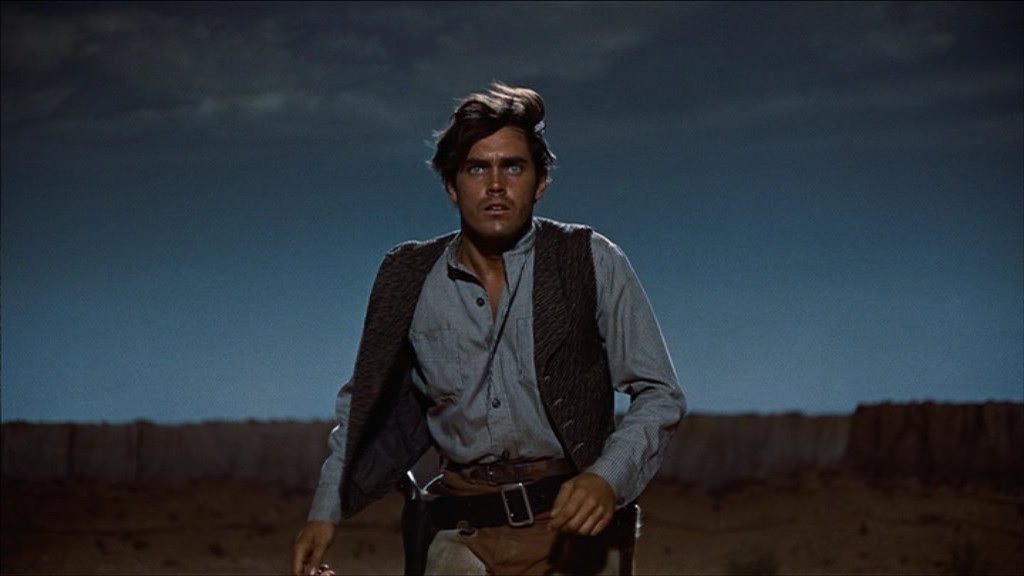
“Pain of heart is the condition for spiritual growth and the manifestation of God’s power. Healings, etc., occur to those in desperation, hearts pained but still trusting and hoping in God’s help. This is when God acts.” – Father Seraphim Rose
There is sometimes this rather erroneous perception amongst certain Christians that after making a drastic change in your life everything will suddenly drastically change in your life; while this can prove to be true, for example, leaving an abusive situation or relationship can result in an immediate and profound lowering of anxiety and inner tension. But those feelings can also prove to be transitory. Years ago, I thought that by leaving the Roman Catholic Church and becoming Orthodox – everything that had transpired before would be miraculously expunged from my mind. In reality, none of it was. When someone is gravely ill, seeking out and finding the best medical care is usually a long process and marks just the beginning of the treatment process. Not the end. At the time, I didn’t understand that. As a result, I became increasingly frustrated, anxious, depressed and angry.
In psychological terms – I was preoccupied with an unresolved root trauma. During countless hours of therapy, repeated exposure to that root trauma through memories is theoretically supposed to lessen the emotional charge of those past traumas. In all honesty, I believe that this treatment works to some degree. But along the way, with the constant focus on trauma, the trauma can begin to define you. It can become all-encompassing.
Here, I am reminded of my lifelong obsession with the American Western film genre. Because the revenge scenario is a predominant feature of those movies. I regard “The Searchers” from 1956 as the ultimate example. Starring John Wayne, whose leading role debut (“The Big Trail”) back in 1930, included a prominent revenge sub-plot, “The Searchers” is about a Civil War veteran who spends 5 years searching for the men who murdered and mutilated his brother’s family and kidnapped his niece. In the end, John Wayne’s character, after he finds the murderers who committed these crimes, mutilates the perpetrators. In the 1960s, the revenge Western become increasingly more violent and gory with the introduction of the so-called “Spaghetti Western” such as “The Good, the Bad, and the Ugly” from 1966.
These Western films of the 1940s through the 60s are truly remarkable artifacts because never before had the psychological underpinnings among men been so thoroughly explored in pop culture. Part and parcel in the plots of these movies was the presence of a Civil War veteran as the protagonist – in real life, the likes of former Union officer Kit Carson formed the basis for these characters. This westward migration of Civil War veterans was spurned along by the Homestead Act of 1862 which offered land grants to former Union soldiers. This Western social milieu of adventure, limitless opportunity, and rampant lawlessness, all interspersed with a growing population of wayward men who were traumatized during the bloodiest war in US history created fertile ground for some very high drama. At the time, observers actually noticed that something was wrong with some Civil War veterans – and this condition was described as “Soldier’s Heart;” due to the fact that some doctors observed apparent abnormalities in the cardiac health of those affected veterans. And PTSD actually can contribute to cardiac abnormalities. While in my 30s, I had to undergo heart surgery.
But the revenge storyline is far the exclusive property of the Hollywood Western. Its roots in Western literature go back to Shakespeare’s “Hamlet.” Other prominent examples include “The Count of Monte Christo” by Alexandre Dumas and Herman Melville’s “Moby Dick.” In the non-Western film genre, I’d like to mention “The Dark of the Sun” from 1968; “Death Wish” from 1974; and “The Dark Knight” from 2008. I’d also like to reference a rather rare sub-category of the revenge genre where there is a female vigilante; they include: “True Grit” from 1969; “Hannie Caulder” from 1971; and “Sudden Impact” from 1983. In all of these movies, the vigilante/hero often walks a fine line between seeking justice and enacting revenge; sometimes they step right over it. Oftentimes, they become the very thing that hurt them. This was most beautifully explored in the 1959 film version of “Ben Hur;” which was directed by William Wyler who earlier in his career made the post-WWII PTSD drama “The Best Years of Our Lives.” The protagonist in “Ben Hur” – like John Wayne in “The Searchers” – spends 5 years of his life in torment and suffering while plotting his revenge against those who betrayed him and his family. And as in “The Searchers,” mutilation is part of the revenge scenario – while in “The Searchers,” the audience never sees the mutilation; we only experience the horror through the faces of the actors (especially through the great performance of Jeffrey Hunter.) But in “Ben Hur,” the disfigured body of Masala (the nemesis of Ben Hur) is shown in all its blood-stained corporeality. The scene in which Masala is forcibly bound, following his catastrophic accident during the climatic chariot race scene, is still difficult to watch – as he writhes in excruciating pain while an attending physician prepares for multiple amputations. During the era of the “Biblical” epic or “religious” pictures (from the 1930s through the 60s) a certain amount of leeway was accorded to these films because supposedly the occasional violence or sexual innuendo was included to illustrate some moral idea. What’s also disturbing about the scene is Ben Hur’s reaction – in an unusually subtle performance from Charlton Heston. Ben Hur still hates Masala, although he’s been reduced to a lump of dying flesh; Masala says: “There is enough of a man still here for you to hate.”
Only, once Ben Hur achieves that goal – revenge – nothing is resolved; except, his anger and hatred only expands outward – from the individual who perpetrated those crimes against him – outwards towards an entire infrastructure that facilitated and perpetuated it. Essentially, he is correct; Masala was corrupted by the cruelty of Rome. Here, Ben Hur is proceeding forward as a truth-teller. Exposing injustice is oftentimes the thankless job of those who’ve been abused and exploited by the powerful. In his megalithic work “The Ethics of Beauty,” Timothy Patitsas spends a lot or time discussing the topic of trauma; and that’s what drew me to this 700+ page book. One of his several insights on this matter addresses the role that abuse and trauma survivors play as safeguards in a civilized society; he said: “The persistence of trauma reactions make the sufferer a prophet regarding the moral outrage of what he or she has experienced…Their sensitivity to triggers means that trauma sufferers are literally our first responders to certain kinds of physical or moral mortal danger.” A contemporary example is actress Rose McGowan, before the advent of the #MeToo movement, she started publicly calling-out the inherent exploitation and hypocrisy in Hollywood. McGowan’s perceptions were undoubtedly informed, not only by her status as a survivor of exploration in the film industry, but also due to her childhood in the “Children of God” cult, her experiences as a teenage runaway, and final move to LA and emancipation from her parents at age 15. It’s my contention that those who suffered during childhood, albeit not always, have an ability to sense danger. I’m thinking of Charlotte Bronte’s “Jane Eyre” whose horrible childhood honed her perceptions. On a global scale is Russian author Alexander Solzhenitsyn, following his exile and imprisonment in the USSR, he reemerged from that trauma as a prophetic witness against inhumanity and tyrannical regimes.
But the danger always remains in losing oneself to revenge – the advent of the “psychological” Western” in the 1950s explored this theme; namely in “Winchester ‘73” (1950) and “The Man from Laramie” (1955) where even the terminally affable Jimmy Steweart is turned towards the dark side because of his hatred. This is also the case with Randolph Scott, who specialized in playing the cowboy hero, when he loses his purpose and himself in a series of revenge Westerns namely “Coroner Creek” (1948) and “Ride Lonesome” (1959). When vengeance is complete – they almost always end up alone. This is the self-destructive endpoint in a life that becomes dominated by hatred and a need for revenge. Partly, it’s not our fault. Studies have clearly demonstrated that exposure especially to early childhood trauma literally rewires the neurobiology of the brain. This should never excuse bad behavior from abuse survivors, but it does help to explain it. One of my favorite films in the revenge movie genre is “Nevada Smith” from 1966 which was one of the last such Westerns released under the old Hollywood studio system. Starring Steve McQueen as Nevada Smith – a young man who goes on a revenge rampage after witnessing the murder of his family. At the beginning of the film, in a scene taken straight out of “The Searchers,” Nevada Smith returns to his home and sees the bodies of his mutilated father and mother; but we never see the gruesome sight; only his face. In the midst of his immediate quest for vengeance, Nevada Smith comes across an empathetic man – Jonas Cord; in many of these revenge storylines, the vengeful younger man will encounter an older and wiser “fatherly” figure who attempts to disway him from continuing his bloody quest. In “Ben Hur,” it was Balthasar. In ancient times, or in lawless areas such as the Old West, such men served as a sort of social safety net in the absence of public mental welfare, organized religious institutions, or strong extended familial bonds. In his conversation with Jonas Cord, Nevada Smith explains his future endeavors; Jonas responds: “You won’t live that long.” Nevada answers: “Well thank you for the food and advice, Mr. Cord. I guess I’ll be on my way.” Then Jonah says:
“Where to? How? What with?…You gotta eat. You need clothes, food, horses, saddles, guns, ammunition, money. How you gonna get that? Tracking beaver on Sundays? I’ll tell you how you’ll get it. You’ll wind up stealing, and killing, and turn yourself into the same kind of animal you’re trying to track down. Can’t you see that?”
Nevada Smith responds:
“I don’t see nothing, except my father laying on a blood-covered floor, all burnt and cut, with the top of his head blown to pieces! And my mother, split up the middle, and every square inch of her skin ripped off.”
This is the plight of the trauma survivor. The frequent inability to remove from the brain such painful imagery. It can sometimes drive you mad. Here, and with every vigilante fixated on revenge, there is revealed certain self-destructive tendencies. In fact, childhood trauma is often a predictor for later suicidality in adulthood. I think Timothy Patitsas does a good job of explaining why trauma can have such a pervasive hold upon those who’ve experienced it. He said: “The cause of our being traumatized is that we have beheld, whether briefly or for a prolonged period, some over-whelming vision of ant-Beauty, some naked ugliness. This ugliness then becomes our guiding black hole…” In his weird and wonderful book “Fight Club” (1996), author Church Palahniuk describes a related scenario:
“If you’re male and you’re Christian and living in America, your father is your model for God. And if you never know your father, if your father bails out or dies or is never at home, what do you believe about God?”
He continues: “What you have to consider…is the possibility that God doesn’t like you. Could be, God hates us.”
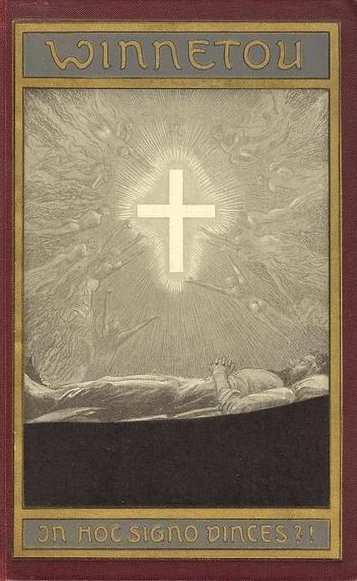
Childhood trauma can taint our perception of everything – even God. For this reason, abuse survivors (myself included) will sometimes remark: “Why did God let that happen?” This attitude eventually leads to nihilism. Yet, even with the seedy underworld of “Fight Club,” there remains this inherently human desire to find purpose, goodness, and even beauty. While I was majoring in Art History, I was always amazed at the overt Christian themes present in the works of artists who led rather bohemian lives as homosexual men; I was particularly impressed by Simeon Solomon (1840-1905), Sascha Schneider (1870-1927), and Duncan Grant (1885-1978). Later, when I became interested in motion pictures as an art form, I was struck by the filmography of Franco Zeffirelli (1923-2019). Of particular interest is Schneider because he illustrated a series of novels by German author Karl May that were set in the American West. The heroes of these books (Old Shatterhand and Winnetou) prefigured the Lone Ranger and Tonto. One of Schneider’s most effective illustrations depicts the death of Winnetou. Schneider and Zeffirelli suffered loss and trauma during childhood, Solomon’s life veered towards self-destruction, while Duncan’s art became increasingly pornographic. Nevertheless, each of these men created impressive artworks that revealed their inner longing for transcendence. A man who understood well how the disordered passions could lead us wildly astray, Fr. Seraphim Rose said: “In pain and suffering Christ speaks to us…for in all of these we glimpse something of what must lie beyond, if there really exists what our hearts most deeply desire.”
I think its incredibly telling that there are very high rates of childhood trauma, namely sexual abuse, amongst men who identify as “gay.”
Trauma is a difficult thing to move on from – let alone heal. At times, it’s something that one learns to manage. Timothy Patitsas said that “a traumatic experience…is not just something awful that happens but something awful that seems to reveal, as if for the first time, that the truest and deepest character of the world is profoundly negative.” He continues: “A tour of combat, an abusive childhood, and certain life situations are distinct among traumatic experiences, however, in that they ‘hit us coming and going;’ they combine the abrupt shock of hell with the slow, indifferent terror of being buried alive.”
This reminds me of the twitchy or hair-trigger disposition that persists in former gunfighters who are attempting self-reform; for instance, Alan Ladd in “Shane” (1953) and Sterling Hayden in “Johnny Guitar” (1954); with Harrison Ford in “Witness” (1985) as a modern example. These characters are exhibiting signs of PTD in their high startle response; this is something I suffer with to this day, because the life-shattering experience of childhood abuse suddenly destroys our personal sense of normalcy and safety. Later, as a wounded adult, I continuously placed myself in various dangerous circumstances; it’s not usual for survivors of childhood trauma to become revictimized or to engage in high-risk sexual activities. Looking back, in a sick way, it was my attempt to normalize the abuse; entering into a community of likewise abused individuals who are all being re-abused. The difficulties faced by those who want to live a different sort of life were exhibited in Harrison Ford’s police detective character from “Witness.” In a way, the film is a study in extremes: a Philadelphia police detective who is immersed in massive amounts of depravity and violence is transported to the bucolic world of the Amish. His attraction to their peaceful life and his inability to fully embrace it demonstrates how the nearness of beauty can heal souls, but the inability to grasp it is the prevailing curse among trauma survivors. In the film this is explicit since the movie is essentially told from the view-point of a trauma survivor – Ford’s character suspects massive levels of corruption in the police department; and these suspicions are conformed to be true; reinforcing our belief in a thoroughly perverted world.
After World War II, in America there emerged a very short-lived sub-genre of films that’s oddly related to the Western. These movies explored the difficulties encountered by men returning home following combat; there are only a few and they include: “The Best Years of Lives (1946), “Till the End of Time,” (1946), and “The Men” (1950). Following the trauma of the Vietnam War, they would be a few more: “Coming Home” (1978), “The Deer Hunter” (1978), and “Born on the Fourth of July” (1989). Like the war-torn veterans of the Civil War, who sometimes aimlessly wandered the Western frontiers, in the greatest of all these films, the men from “The Best Years of Our Lives” go back to their homelife of staid domesticity and find it impossible to reintegrate into society and their families. It also takes a fairly cynical look at the way returning soldiers were treated by civilians who simply wanted them to “snap out of it.” As a result, they can only find comradery and sympathy in a bottle, amongst fellow veterans, and from the devoted, patient, and understanding women who love them. And it’s their ability to receive and return that love which saves them. The full extent of the problem was revealed (also in 1946) by film director John Huston in his PTSD documentary “Let There Be Light.” Its raw and unflinching, but rather antithetical to the image of post-War optimism being heralded by the US government so the film was quickly suppressed and it disappeared. But the documentary makes historical sense to me, because I often wondered why the Boomers (the children of WWII veteran fathers) in the 1960s wanted to burn it all down.
The other darker side of this story emerged in the “Film Noir” which became popular with film-goers at the same time period. Prefiguring the grittier “Spaghetti Westerns” and those of director “Budd Boetticher,” the male protagonists and heroes in Film Noir are complex characters who’ve seen the dark side and the ugliness of humanity; for this reason, “Witness” is sometimes classified as a “Neo-Noir.” Its all reminiscent of the famous quote from Fredrich Nietzsche which went something like: “If you stare into the abyss, the abyss stares back at you.” Sounds like a character from the nearly unwatchable Neo-Noir movie “8MM” (1989), when he said: “If you dance with the devil, the devil don’t change. The devil changes you.” Although Noir implies a certain desperation, willingness, and agency on the part of the observer who is traumatized, yet, in the case of the completely innocent – as in children – it can also happen unwittingly; it’s hauntingly evident in the 1985 Soviet film “Come and See” when the face of a boy literally ages as he witnesses the atrocities of German occupation during WWII. But in the frequently nightmarish world of the Film-Noir, the protagonist(s) are oftentimes war veterans caught-up in unresolved anger, violence and eventual criminal activity – namely because they can’t leave the battles of the past behind; it’s like being haunted by the past – as chaos seems to follow them as in “The Blue Dahlia” (1946) and “Kansas City Confidential” (1952). As if they are merely part of something that is out of their control; a sort of physiological disassociation. In the Western genre, the 1958 film “A Man of the West” is an unpleasant movie with a couple of rather disturbing scenes that delves deep into the pervasive nature of trauma and its effects on the psyche. The protagonist, a man played by Gary Cooper, an actor associated with the Western more than anyone else except John Wayne, finds himself back in the clutches of the psychotic outlaw uncle who raised him as an orphaned child. Even though he’s reformed his life, married, and had children, when under extreme pressure, his anger and hatred return and his violent and sadistic compulsions quickly reemerge.
“What is hell? I maintain that it is the suffering of being unable to love.” – Fyodor Dostoevsky, “The Brothers Karamazov”
In Film-Noir, the presence of the “feme fatale,” a usually greedy, scheming, and self-centered female, abrogates the possibility of trauma healing in the man through the love of a woman; unlike that which takes place due to the dedicated perseverance of the women in “The Best Years of Our Lives.” In the typical Western, such women are occasionally present although they tend to wait around for much of the film (as the men fight it out) and then reappear near the end to help pick up all the pieces. Such women had a vested interest in swaying men away from revenge and the resulting destruction because in every war throughout history, it’s been the women and children that often suffer the most. But in the 1950s, especially in the new genre of the Television Western, an interesting kind of dynamic began to emerge in shows like “Rawhide,” “Wagon Train,” and “The Virginian,” where men were collectivized into groups due to avocation or necessity. Within these communities, that existed sometimes on the periphery of polite society, which included drovers (cattle herders), frontiersman, and cowboys, men at loose-ends (including the shell-shocked from the Civil War) came together usually under the strict tutelage of a trail-boss, wagon-master, or foreman. Men who were unable to follow the simple rules – putting in an honest day’s work for an honest pay – were generally expelled. A repeated storyline setup in all of the TV Westerns was the idea of hatred and revenge stemming from the Civil War. A very strong example was an episode of “Rawhide” from 1960 entitled “The Blue Spy.” During a cattle drive where all of the drovers are former confederates (except one), they come across a stranded woman – a former Union spy. The trauma these men endured during the War is so close to the surface (and it has nowhere to go) that it falls upon a helpless woman. Gil Favor, the strict but fair trail-boss says to the angry men: “The war is over…I don’t blame you if you can’t forget, but there does come some time for forgivin.” His words fall upon deaf ears, and when a few of the men persist in their desire to kill the woman, Favor makes a case for an armistice when he tells them about the world they have created, one in which: “…the war never really ended and we can just go on fighting it forever.” Although, through the force of Favor’s leadership, the woman’s life is spared, there is no resolution. At the conclusion she observes that the wounds of war are too severe, “the scars are too deep.”
This oft used plot element goes part and parcel with a sub-genre of the Western – the reformed gunfighter turned preacher or the preacher who’s good with a gun. I would recommend viewing the excellent “Stars in My Crown” from 1950 – probably one of the finest Westerns ever made – and the inferior, but still highly watchable, “Count Three & Pray” from 1955. In 1985, Clint Eastwood brought back the genre and instituted the era of revisionist Westerns when he portrayed a gun-toting preacher in the mystical film “Pale Rider.” What was accomplished by each of these characters is a general easing of anger, hatred, and tensions in their prospective towns. Sometimes this is accomplished by force; but usually through the sheer weight of their integrity. They sort of flip the scenario of the Film Noir – that of the battered man who witnesses depravity and destruction – but instead of it destroying him, he comes out the end other end as a force for calm amidst chaos. In the secular realm, this was fully realized in the Television Western “The Adventures of Wyatt Earp” which ran from 1955-1961. The actor portraying Earp, Hugh O’Brain, while not the most physically imposing man on the screen, however he quieted the ruckus in every saloon that he entered. He could carry an air of authority everywhere he went. And most of the time – he never even had to remove his gun from its holster. The most famous example of the type in the movie Western in Shane; the legendary 1953 film was based the 1949 novel in which the title character was described this way by the young boy who admired him:
“He was not much above medium height, almost slight in build. He would have looked frail alongside father’s square, solid bulk. But even I could read the endurance in the lines of that dark figure and the quiet power in its effortless, unthinking adjustment to every movement of the tired horse.”
Besides Joel McCrea, Randolph Scott is one of my favorite Western actors, and Scott’ son thus described his father: “His presence commanded attention but didn’t demand or expect it.” I don’t want to push this comparison too far, but certain people have felt a profound peace when simply being in the presence of holy men or Saints – St. Paisios of Mount Athos is frequently mentioned in this regard, and so is Fr. Seraphim Rose. But film, and to a lesser degree television and social media, serve in a secular society as a type of religious experience. This is already evident in the early Hollywood photography of George Hurrell who imbued his photos of glamorous movie stars with an almost ethereal glow. In the 21st Century, this has become more pronounced with audience fascination for ever more increasingly god-like movie superheroes. Like Dostoevsky, who famously said that “beauty will save the world,” I think Timothy Patitsas in his book is arguing that there is a definite salvific quality in beauty – which reaches its summation in Orthodox liturgical life. When having such a liturgical experience is deemed impossible due to location or mental and spiritual disposition, the instinctual need of man to experience the transcendent does no simply disappear – instead it morphs into other forms; and the Western is the classic example when lost men veer towards criminality and outlaw gangs. There isn’t much that has changed over the years, as urban blight becomes dominated by roving bands of young male gangs engaging in endless street warfare. It’s telling that a saloon owner, outlaw, or corrupt politician would forcefully resist the influence of a preacher – and especially the building or reopening of a church in a town they controlled; in the Western musical “The Harvey Girls” (1946), the repeated threat of a local church opening is a reminder to the lawless that the wicked candor of the town will soon change.
“…your worst sin is that you have destroyed and betrayed yourself for nothing.” – Fyodor Dostoevsky, “Crime and Punishment”
I’m reminded of a line spoken by Clint Eastwood in “The Outlaw Josey Wales” (1976). A revenge Western set during the post-Civil War period, Eastwood, who avenged the deaths of his family says: “I guess we all died a little in that dammed war.” And at the conclusion of “Nevada Smith,” Smith also arrives at a similar conclusion and that’s emptiness and desolation. In summation, the pointlessness of the whole endeavor. He says to one of the murderers: “You’re just not worth killing.” And like Josey Wales, he simply rides away and it’s the end of the movie.
I think the fictional character of “Pollyanna” has been undeservedly mocked – she was first featured in a series of books and then immortalized in the Disney live-action film version from 1960. But actually, Pollyana was a trauma survivor; her destitute missionary parents were so poor they were unable to even give her a single doll, she is then left orphaned, and later sent to live with a loveless and bitter spinster aunt. And it’s not that she saw the world through rose-colored glasses, but she chose to find something good in almost every situation; in a sense, this was her coping-mechanism when faced with some very daunting circumstances in which she had very little or no free agency.
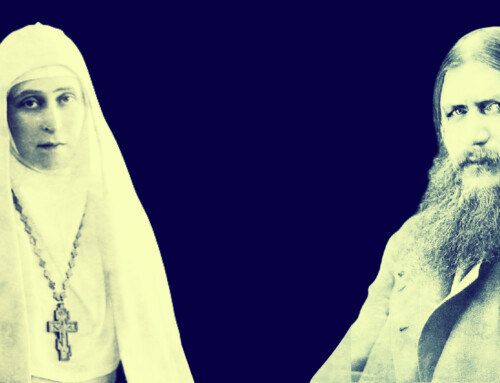
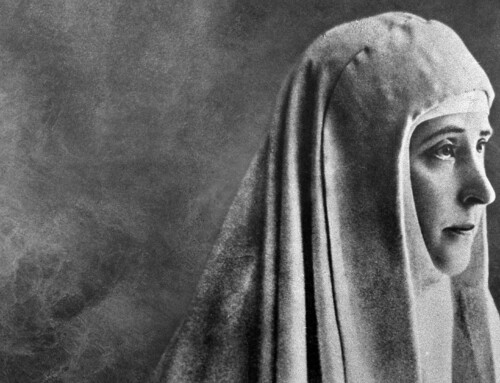
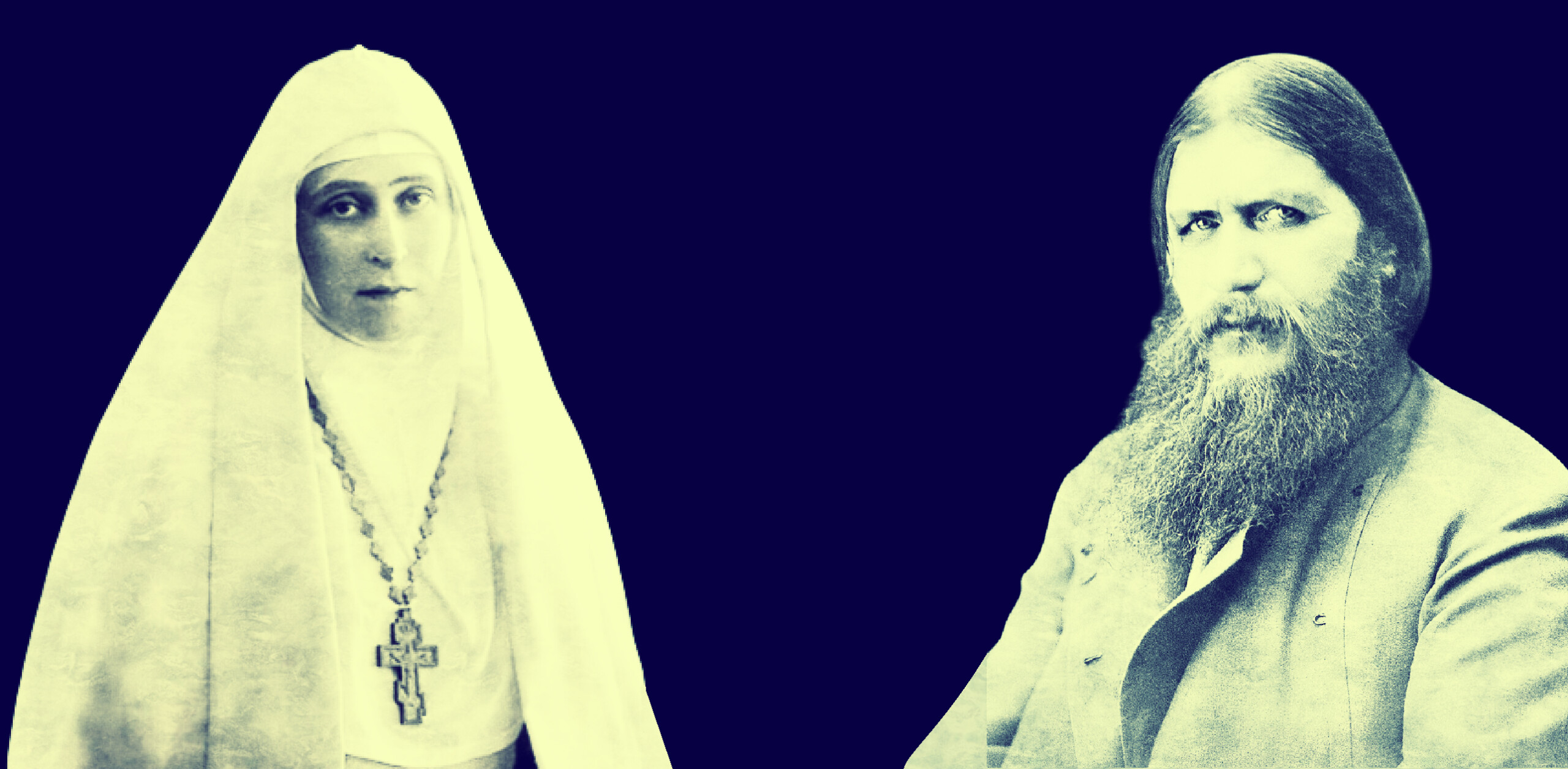
Over the years I’ve become sort of fixated with the last Imperial Russian royal family – that of Czar Nicholas the II and Alexandra. I have read every biography I could get my hands on about the family. I am particularly fascinated by their imprisonment for about 16 months in 1917 and 1918 – until their murder on July 17th. For much of that time, they were exiled to Siberia and endured rather deprived conditions and increasingly abusive treatment. Yet, their attitude during this period could be derided as Pollyanna-esque as the family seemed to be indifferent towards their predicament. They made the best of a bad situation; keeping busy with reading, studying, making handicraft gifts using little tattered pieces of used cloth, producing comedy skits where the only audience was each other, simply enjoying each other’s company, and taking profound comfort in religion; they also took every opportunity to show kindness to their captors. My exploration of this historical topic has been so thorough that I started branching out in order to study the lives of the Romanov relatives – like Grand Duchess Elizabeth. And through my research into her life (as well as that of her biological sister Alexandra) I came across Princess Alice (1885-1969) – the niece of both Alexandra and Elizabeth (the eldest child of their sister Victoria.) Alice, despite being born deaf, witnessing first-hand the extreme horrors of several wars, surviving years-long institutionalization for mental illness where she was subjected to experimental treatments, and then surviving the dissolution of her marriage, being abandoned by her husband, and the tragic death of a daughter, yet she was able to dedicate her life to the service of others by working towards the establishment of charitable religious order of Orthodox Christian nuns – based on the community founded by her aunt in Russia following the assassination of Elizabeth’s husband. If anyone had reason(s) to be incredibly angry and resentful it would be Princess Alice. She didn’t do that.
The actor William Boyd (1895-1972) was born ten years later, a world away in the United States of America and not into privilege but poverty. His parents died when he was still a boy and by his early teens was forced to leave school and had already worked in a series of jobs that were even grueling for adults, including as a miner, lumberjack, and in the oil fields; and this was at a time when there were very few to no child labor laws. But Boyd was handsome, athletic, and ambitious, and like the endless stream of pioneers and adventures who traveled West in the 19th century, he headed to California. There, while working as an extra in Hollywood, he caught the attention of the great silent-screen director Cecil B. DeMille who started to feature Boyd in his movies. And unlike other actors at the time, Boyd successfully made the jump to talkies in 1929. During this period, Boyd would marry four times (mostly to actresses) and lived a rather extravagant lifestyle that befit his station as a “matinee idol.” Yet it all soon came crashing down. In 1931, another actor named William Boyud was arrested on a charge of drug possession. And the newspapers ran the picture of the other William Boyd. Suddenly, at age 35, his career was over.
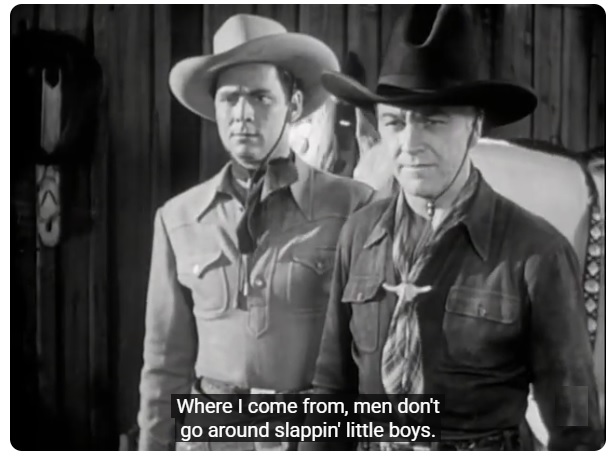
Then, in 1935, Boyd was offered the role of “Hopalong Cassidy.” In the 1930s, before John Wayne reached the echelon of a global star, Westerns were not considered prestige projects in Hollywood, but usually relegated to the status of a B-picture. So, this was a major step-down for him considering his former prominence. The Hopalong (aka “Hoppy”) films were a hit and between 1935 – 1948, over 60 movies were produced. My personal favorite is “Renegade Trail” from 1939. It’s a simple story, about criminals and various rustlers out to swindle a woman whose dead-beat husband has been in jail for many years; she’s told their only child, a son, that his father died a hero during the War. Now, the fatherless boy idolizes Hopalong Cassidy. In a crucial early scene, just as he’s initially riding into town, Hoppy reprimands a low-life who just hit the boy. It’s a powerful scene; a truly Shane-like moment when everyone’s attention is on Hoppy as a protector and benefactor of the innocent and helpless. He exudes a quiet strength. In his own life. Boyd would come to mirror the character he played.
In 1937, Boyd married for the fifth and last time to the woman he would spend the rest of his life with. After the Hoppy series came to a conclusion, Boyd bought the rights to the films. Smart move. Because in 1950 they began to be shown on a new technology that entered the living-rooms of the American home – television. He then created over 50 new half-hour long “Hoppy” episodes. In 1950 alone. Boyd appeared on the covers of “Life Magazine,” “Time,” and “Look.” That was a cultural milestone. At that time, he couldn’t have been more famous or successful. Looking back, I guess Boyd could have gone on a revenge tour à la the Count of Monte Christo. He could have become bitter. He didn’t. Instead, he chose to do good. He visited children’s hospitals, gave to charities benefiting kids, and when the Hoppy character appeared on hundreds of merchandising items, Boyd refused to advertise for cigarettes or alcohol. From the 1950 “Time” story:
“Boyd made Hoppy a veritable Galahad of the range, a soft-spoken paragon who did not smoke, drink or kiss girls, who tried to capture the rustlers instead of shooting them, and who always let the villain draw first if gunplay was inevitable.”
According to one of the obituaries printed after his death: “The responsibility of being a children’s hero transformed Mr. Boyd, onetime playboy, into a philanthropist devoted to strengthening the fiber of American youth.” Boyd himself once said: “The way I figure it, if it weren’t for the kids, I’d be a bum today. They’re the one who’ve made my success possible. They’re the ones who should benefit from it.”
A consistent theme in the directorial work of Clint Eastwood – from “High Plains Drifter” in 1973 to “Cry Macho” in 2021 – has been that of loss and trauma. As evident in his directing debut in 1971 with “Play Misty for Me,” I think he’s also been keenly interested in the psychological underpinnings of it all. “High Plains Drifter” is not his best film, it’s actually an ugly piece, and its one I can’t recommend due to the violence and language, but it does reveal what happened to the American Western, Western society, and the role played by trauma in its decline. The “drifter” in the movie is the ghost of a murdered marshal whose hatred towards those who conspired against him is so great that not even death can stop it from being unleashed. The film was released as the US convulsed with yet another general trauma caused by war, this time the disaster that was finally unraveling in Vietnam. And unlike the wounded men from “The Best Years of Our Lives,” they didn’t suffer in silence while remaining discreet and dutiful, they were visibly angry. And men in general have never spoken readily or easily about trauma – for this reason, suicide rates have always been higher among males – but the American Western proved fertile ground for an exploration of the trauma that men had endured; with the PTSD suffered by Civil War vets in the West as a metaphor for the trauma induced by World War II and even Korea. But was any of it ever really addressed – I don’t know. However, I think it probably wasn’t – as evidenced by the rise in alcoholism among the veterans of WWII, the cultural-annihilation led by the Boomers, and the hopelessness that pervades younger generations. And trauma has a way of compounding itself as it remains unresolved year after year – almost passing along from father to son – family to family; in terms of economics, I think this has been established by the continued presence of generational poverty. In a sense, the untreated trauma of WWII resulted in “High Plains Drifter.”
While I think the persistence of trauma is often driven by generational forces, you don’t have to be ruled by your circumstances. I am thinking of Yuri Gagarin – the first human to travel into space. He had a dreadful childhood during WWII; the Nazis kicked his family out of their home, and they were reduced to living in what was essentially a dirt hole in the ground; he had to witness the hanging of his brother (though he survived) by a German soldier, and the accompanying poverty and privation that went along with the post-War period. Yet, he transcended such dire beginnings. Was he a perfect man? No. After reading several biographies about his life, I can see the lingering effects of trauma. And some of the children of Princess Alice experienced trauma during their childhood and the effects of that trauma has continued to revisit subsequent generations. But it doesn’t take anything away from the good she did. And in helping others who are suffering, we don’t necessarily forget our own trauma, but we make something good out of the terrible things which happened to us. Because I think healing of trauma is a communal experience – and this where church and the liturgy is indispensable. In the secular manifestation, this where the best of the Western movies truly shined like nothing ever before or since in pop culture, in that they provided a space (albeit a fictional one) where men could share their trauma and find healing within comradery, honestly, and hard work. And it is hard work to overcome and heal from the past. And that’s why I began with a particular quotation from Fr. Seraphim Rose about “pain of heart.” Because it’s going to hurt. Because the only way out is through. That adage was penned by the poet Robert Frost who lost his father when he was 11 years old, leaving his family in poverty.
While initially watching (the first and last time I’ve seen it) a film I don’t care for very much, “High Plains Drifter,” in one scene that took place inside the town church, I noticed a plaque on the wall painted with this Bible verse:
“He is despised and rejected of men; a man of sorrows, and acquainted with grief: and we hid as it were our faces from him; he was despised and we esteemed him not. Surely he hath borne our griefs, and carried our sorrows: yet we did esteem him stricken, smitten of God, and afflicted.” – Isaiah 53:3-4
Interesting. Was its inclusion an accident or purposeful? I suspect the latter. Perhaps its referencing the psychotic ghost in the film that’s bent on revenge; I’d like to think of it as a guidepost for the abused and traumatized who are seeking another path. Of course, this verse from Isaiah foreshadows the ultimate sacrifice of Jesus Christ, yet it could also be seen as an allusion to the suffering of the traumatized. For throughout the sacred history of the Church, the most favored by God have also been those who’ve suffered from abuse; i.e. St. John Chrysostom and St. Nektarios of Aegina. The abused always have a few choices: unleash their wrath upon the world, turn it inwards and self-destruct, or unite their suffering with Christ. The first two don’t work; I’ve tried them. They only make the situation much worse; and they end in emptiness and suicide. On a cultural level, the nihilism and gore of the Western in the 1970s prefigured the subsequent multiplication of serial killers, mass shootings, and the epidemic of drug overdoses. The dreadful “Django Unchained” from 2012 reveals how far the genre and society have collapsed. And it’s not that previous films weren’t gritty; two of the best revenge Westerns from Randolph Scott are “Coroner Creek” and “Ride Lonesome” are very dark. Each of these movies delves into just how deeply hate burrows into the human heart. But the avenger is never gloried nor envied. They’re chosen course of action usually carried with it a set of consequences. In “Coroner Creek,” a stalwart woman warns Scott’s character about his actions; she says: “Hate is something that can feed on itself for only so long.” She warns him about how his hatred may destroy the killer of his wife, but she continues: “it can also destroy you.” He largely doesn’t listen. Then, at the conclusion, as the women and some of the men are on their way to church on Sunday, all of the built-up hatred and vengeance is unleashed and concludes with the death of the wicked. But in this movie, a woman is there to help the protagonist rebuild his life amongst the devastation he’s created. But in “Ride Lonesome,” there is a much more pessimistic ending as Scott’s vengeful character is left alone after killing the man who murdered his wife. It’s not a hopeful finale, but suffused with the emptiness, isolation, and loneliness that’s inherent within the desire for revenge that continues after its supposed resolution.
It’s the fulfillment of the prediction made by Dostoevsky about destroying yourself for nothing. It’s taken much of my life to figure that out – hatred and revenge don’t resolve anything. What actually helps is seeking health and healing in comradery and work, not in isolation and depression. Then, you can help others who are too wounded to help themselves; in a sense, you are helping your former self. When we do that, we are truly becoming more Christ-like. And as I’ve learned all too well, that also means that we are being called to suffer. But pain is something, as abuse survivors, we are very familiar with. It doesn’t make it easier to endure, but unlike when you are filled with hatred and revenge, it’s a pain that feels like it has a purpose beyond ourselves.
Lastly, one of my favorite TV Westerns, “The Lone Ranger” (1949-1957), was also the first. It’s about two men (the Lone Ranger and Tonto) with traumatic backgrounds who should have mistrusted (even hated) each other in the Old West. One was the victim of a vicious crime and the other a Native American – a group that saw its share of prejudice and persecution during the Westward expansion. But their shared experiences drew them together instead of dragging them apart; as well as their desire for justice. And in that they found purpose – by doing good anonymously. Thus, they changed themselves, each other, and the world around them. Its no surprise that the 2013 reboot, reimagined as a gory revenge Western, was a total failure. Because that’s not what the original was about. It was about two men that were hurt who decide to return the evil done to them, not with more evil. But with good.
“And God will wipe away every tear from their eyes; there shall be no more death, nor sorrow, nor crying. There shall be no more pain, for the former things have passed away.”

Wow! An excellent piece of writing. You brought me to tears so many times and you spoke truth about what it’s like to have experienced trauma. Those are my immediate reactions after reading it. I’ll have to read it again and reflect more on the parts that brought me to tears to give you deeper comments.
Thank you for writing it. Thank you so, so much.