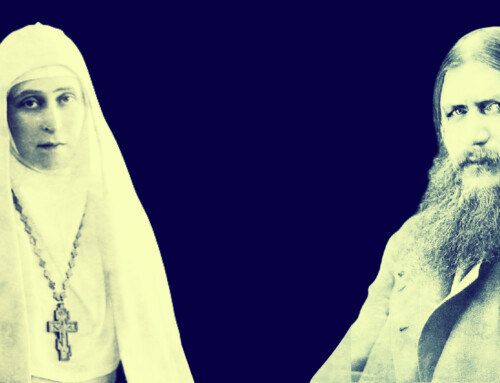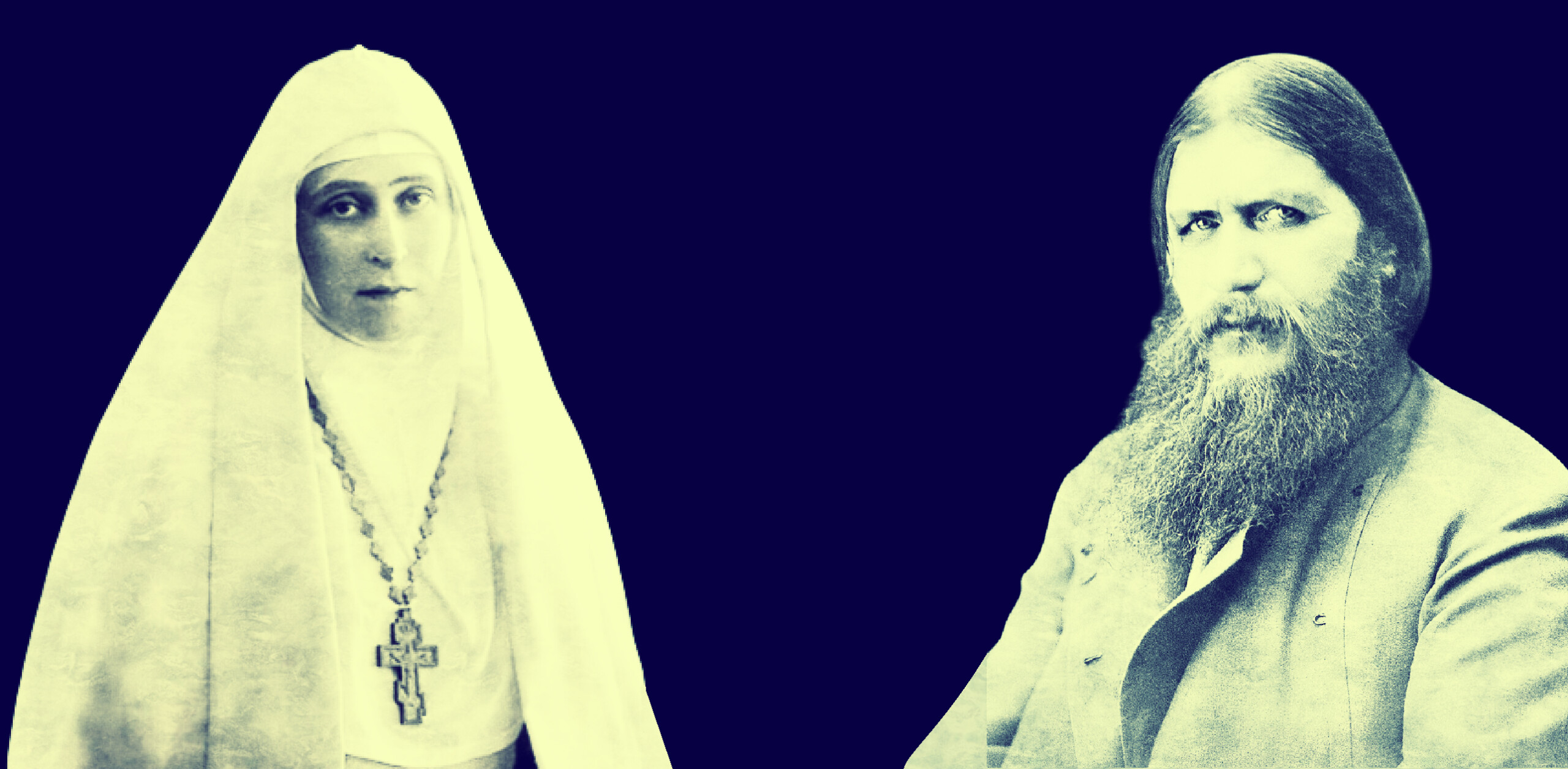
In our world that currently seems so full of violence, conflicts, assassinations, anarchy, and madness, I am reminded of a brave woman who lived through eerily similar times. Especially during the early-20th century, Russia experienced a then unprecedented time of war, revolution, and mass murder. Yet, in the midst of this chaos, Grand Duchess Elizabeth rose above the horrors of her time.
Elizabeth grew-up surrounded by tragedy. She was only 8 years old when her hemophiliac younger brother died following a tragic accident. Her baby sister died of diphtheria when Elizabeth was 14; followed about a month later by her beloved mother – Princess Alice. But as the second eldest child in the family, after her sister Victoria, Elizabeth had the opportunity to grieve for those she lost, then she needed to help with her four younger siblings – including the 6-year-old Alix – later the Empress of Russia following her marriage to Nicholas II.
Although she was the granddaughter of Queen Victoria, Elizabeth had been born and raised in the rather obscure and modest Germany Duchy of Hesse and by Rhine. Her upbringing was decidedly unpretentious and rather spartan – which was later reflected in how Alix would raise her 5 children in St. Petersburg. Elizabeth’s mother, as the Grand Duchess of Hesse and by Rhine took a particular interest in social work with an emphasis on healthcare and the needs of the underprivileged. This idea of service to those with less had been instilled in the young Elizabeth from an early age.
Although she had many powerful and well-connected suitors, her grandmother was busy making strategic dynastic plans for the Hesse sisters – including Elizabeth and Alix, but when she was 19 years old, Elizabeth accepted the proposal of marriage from the Russian Grand Duke Sergei. Far down the line of succession, she could have made a more advantageous match, but like her mother before her – she chose love over worldly ambitions. While in Russia, although she could have lived a completely frivolous existence as the wife of a wealthy Grand Duke, filled with endless banquets and balls, (Elizabeth was known for her beauty, vivacious personality, and exquisite manners), she saw great need amongst the poor; almost immediately after her marriage – providing health care for pregnant women in the villages near her country residence. When her husband became the Governor of Moscow, she was well-known and widely loved by the residents due to her charitable endeavors involving the poor, orphans, and the imprisoned.
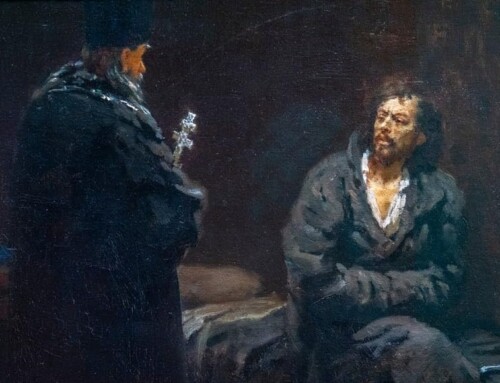
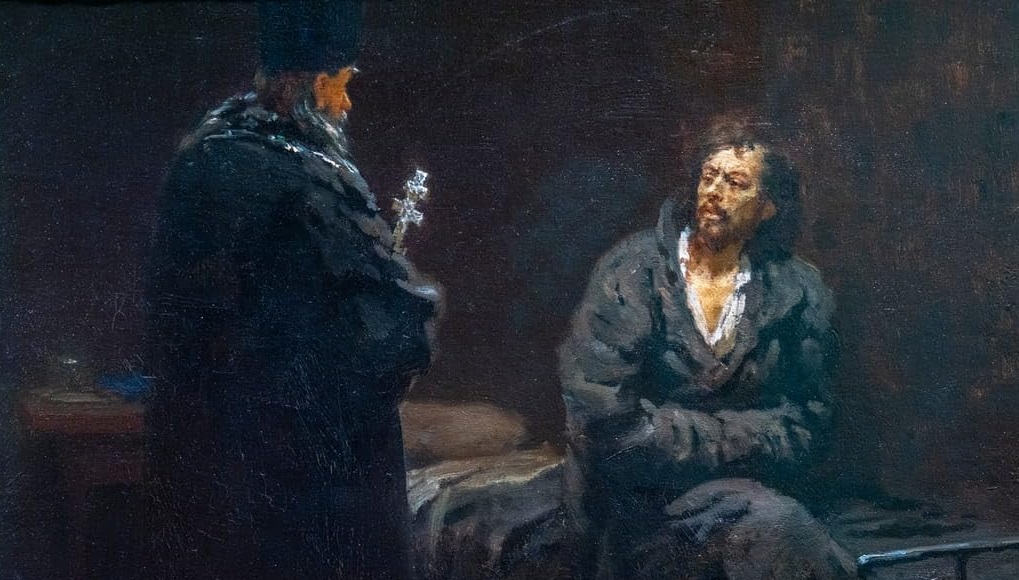
When Grand Duke Sergei was assassinated, Elizabeth was a relatively young woman and still beautiful; then, her life could have gone in different directions: she could have wallowed in hate and self-pity or she could have become an influential and glamourous rich widow in the manner of Catherine the Great. But she did not. In fact, a few days later, she visited her husband’s assassin in prison. She gave him a small icon; and forgave him. According to Grand Duke Alexander Mikhailovich (the husband of Grand Duchess Xenia – sister to Nicholas II), Elizabeth’s visit with her husband’s killer “was not a pose, a desire to show off, but a sincere feeling of mercy that drove her…” However, she wanted the fact that she met with him at all to be kept a guarded secret.
So soon after such a horrific event, her radical form of forgiveness is almost incomprehensible to me; for I am still holding onto some of the anger stemming from the abuse I experienced decades ago when I was a child. But there is much that is mystifying about the Saints. Still, in hindsight, my longtime inability and unwillingness to forgive has only resulted in my own bitterness and despair. It also tends to poison everyone around us. According to his own letters from prison, the killer of Grand Duke Sergei remained unrepentant while some accounts report that he kept the icon given to him by Elizabeth and it remained at his bedside until he was executed. In the end, in my estimation, our own unforgiveness impedes the healing process among others. Elizabeth was no such impediment.
Afterwards, she devoted her life to the suffering, the sick, and the unwanted. She began the process of founding a female religious order of nuns dedicated to caring for the most forgotten. The tragedy of her life became her triumph. Not her undoing. I’ve seen situations such as this go in very different directions. After experiencing some sort of violence, trauma, or tragedy – you can go down a path of hatred, self-destruction, and death or you can figure-out a way to survive and continue to live. If you have faith, it won’t be easy. But it’s at least a possibility.
Instead of wallowing in self-pity, Elizabeth tirelessly served those most in need. This was exemplified by her work in the Khitrovka Market section of Moscow – or its notorious slum district. There, despite the warnings issued to her by local authorities who were concerned about her safety, Elizabeth reached-out to the local thieves, prostitutes, vagrants, what we would describe as the homeless and the early-20th century equivalent of child-sex trafficking victims. And for her efforts, the poor and the simple people of the streets greatly loved her at a time when those of her former rank and station were becoming more and more despised.
But fortunes are often fickle and during World War I, due to several factors, including the Russian losses to the invading German Army, food shortages in the cities, and the major political missteps of her sister Alexandra in St. Petersburg, anger and even hatred fell upon Elizabeth due to her German heritage; though the source of this agitation originated with the radical elements in Russian Society (i.e. the Bolsheviks) and generally not from the common poor who continued to flood into her hospital. But then she and her convent became the target of a mob attacks, but Elizabeth remained steadfastly dedicated to her work.
Those who knew Elizabeth remarked about her composure; Archbishop Anastassy recalled: “It seemed that she was standing on a high, inaccessible cliff and, from there, overlooking stormy waves, she mentally gazed at far-off eternity.” A visitor to her hospital, the relatives of a critically ill patient, said of Elizabeth: “…she suddenly entered the room. She was calm, composed, and smiling. I cannot adequately describe the effect her sudden appearance made on me. Her presence could be felt as well as seen, and I believe that had I been blind, I would have known just as well that a holy person had entered the room.” In my ways, Elizabeth was a living example of something St. Seraphim of Sarov said – a Saint with whom she had a particular devotion: “Acquire the spirit of peace and a thousand souls around you will be saved.”
After the February 1917 Revolution (followed by the October Bolshevik Revolution), while various Romanov family members were being placed under arrest – including Nicholas and Alexandra, several opportunities arose whereby Elizabeth could have safely left Russia; she refused. During this trying time, she became critically ill with typhus, but she remained at her convent. In 1918, she wrote in a letter: “Think of a storm; what sublime, frightening impressions. Some are so frightened, others hide themselves, some perish and others sense in all this the might of the Lord. Isn’t this a picture of our present times? We labor, pray, hope, and every day we feel Divine Mercy. In fact, it is a constant miracle that we experience; others begin to feel it, too, and come to our Church to seek rest for their souls.” I think this encapsulates Elizabeth’s philosophy: withstanding every disturbance through prayer, perseverance, and service to others.
Later, after her arrest and imprisonment, she sent a letter back to the Sisters at her convent; she wrote: “the Lord has found that it is time for us to bear His cross. Let us try to be worthy of it…Let us be patient and humble. Let us not complain, but be grateful for everything.” This was a woman facing death after a life filled with tragedy and heartache. But she does not complain; and she is grateful.
Two of her Sisters from the convent in Moscow accompanied Elizabeth into imprisonment; when they reached their ultimate destination in Siberia, one of the me, Sister Barbara, decided to remain with Elizabeth and share her fate. Those who also joined Elizabeth in death were three of the sons of Grand Duke Konstantin Konstantinovich, Prince Vladimir Paley, and Grand Duke Sergei Mikhailovich and his valet. The accounts describe their resolute and unwavering manner as they were led to execution – initially being thrown down an old abandoned mining shaft. Afterwards, witnesses said that the victims who were not killed by the fall began to sing hymns. This reminds me of a line from one of my favorite movies – “Quo Vadis” (1951). The pagan libertine Marcus Vinicius, who is wavering towards a conversion, finally lashes out at Nero. While witnessing the ugly executions of the Christians, who sang to the Lord as they were violently tortured and killed, he says to the manically evil Roman Emperor: “These people know how to die, Nero. In death you will squeal like a hog.” Josef Stalin reportedly died in a pool of his own urine; remaining for hours on the floor of his bedroom; Stalin’s guards were too frightened of him to check-up on the Communist dictator.
While Elizabeth enkindled only loyalty and love from those around her; this includes Nicholas and Alexandra who were followed into death by four of their loyal retainers; the dictators that followed the Revolution in Russia only ingratiated loyalty through fear and violence. It was St. John of Kronstadt (a contemporary of Elizabeth) who said: “Love calms and agreeably expands the heart and vivifies it, whilst hatred painfully contracts and disturbs it. Those who hate others torture and tyrannize themselves.”
In my own life, where I should have been compassionate – I was judgmental; where I should have been forgiving – I was filled with anger; where I should have expressed love – I offered only hatred. But that is why this is a fallen world; because mankind has almost always chosen revenge over redemption. For centuries, the Saints have continually pointed us in a different direction. Many don’t listen. The wisest learn from the Saints. Reminds me of this short admonition from God: “Stand in the ways and see, and ask about the eternal pathways of the Lord. See what the good way is and walk in it. Here you will find purification for your souls.” Truly, Grand Duchess Elizabeth pointed out that way – if we would only follow it.